01
Key detail
Yes, it can feel warmer in direct sun
That is normal, but the severity depends heavily on the site rather than on one simple yes-or-no answer.
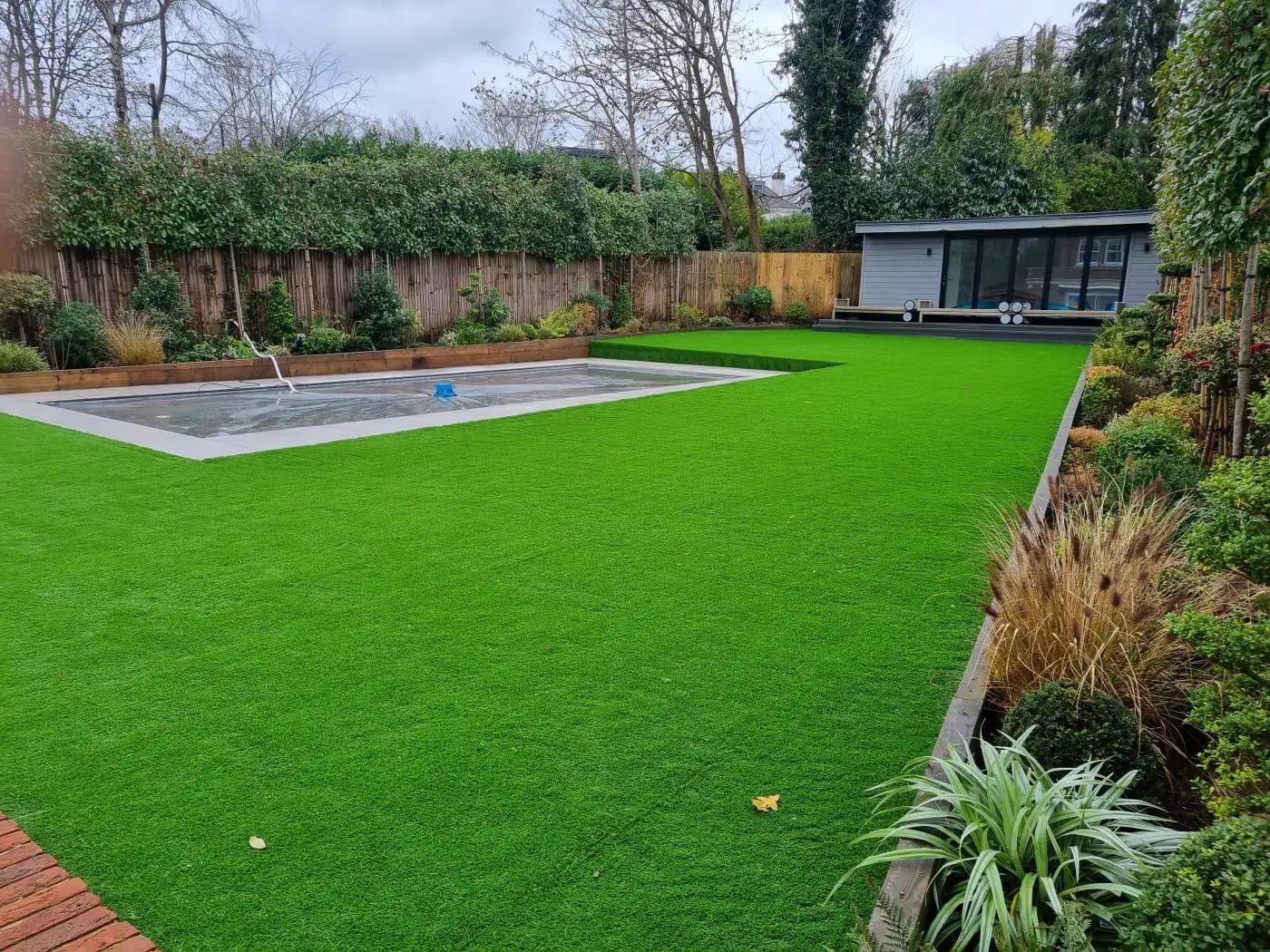
Guide
Find out whether artificial grass gets hot in summer, what shapes the surface temperature of a UK lawn, and when it becomes too hot for children to use barefoot.
★★★★★ 5.0 on Google · Free, no obligation · Reply within one working day
Key points
Yes, it can feel warmer in direct sun
The surrounding garden layout matters a lot
Design choices usually reduce the issue
Key detail
That is normal, but the severity depends heavily on the site rather than on one simple yes-or-no answer.
Key detail
Hard landscaping, airflow, shade, and enclosure often influence how hot the lawn feels as much as the turf itself.
Key detail
Shade, planting, layout, and a sensible discussion at survey stage usually matter more than panic about summer heat in isolation.
Yes, artificial grass can get warmer in direct sun than natural grass. The more useful question is how much that matters for your garden. Surface temperature is shaped by sun exposure, surrounding paving, airflow, shade, and how the space is actually used, not just by the turf alone.
Direct sun exposure is the obvious factor, but it is not the only one. Gardens surrounded by paving, walls, and masonry usually trap more heat than open gardens with planting and airflow.
That is why two similar lawns can feel quite different. The site context changes the result as much as the product choice itself.
The gardens that notice heat most are usually enclosed spaces with strong afternoon sun, a lot of surrounding hard landscaping, and limited shade. If children or pets use the surface barefoot during the hottest part of the day, the issue also becomes more noticeable.
By contrast, more open gardens with a mix of planting, shade, and airflow often experience the issue less dramatically than people fear when they first ask about it.
Shade is the biggest practical help. Trees, sails, pergolas, and planting all change how the garden feels. A quick rinse can cool the surface temporarily, but long-term comfort usually comes from better layout and shade rather than constant watering.
This is one reason the conversation should be about the whole garden rather than a single product claim. In many family gardens, the solution is part installation advice and part garden design thinking.
If the garden gets intense sun, has a lot of surrounding stone or paving, and is mainly used by young children or pets, heat should absolutely be part of the specification conversation. It may influence the finish, the layout, or how different parts of the garden are used.
That does not automatically mean artificial grass is the wrong choice. It means the brief should be handled honestly rather than answered with a blanket reassurance.
Heat is only one part of the decision. Drainage, mud reduction, overall appearance, maintenance, and how often the garden is used through the colder months matter too. For many households, the yearly practical gains still outweigh the summer heat factor once the whole site is considered properly.
If you are unsure, a survey is the most useful next step. That lets us assess exposure, surrounding materials, and how the space is actually lived in rather than giving a generic answer that fits no one particularly well.
Service
See how we design lawns for family use across Hertfordshire, Essex, and nearby London.
Open this page
Service
Useful if the concern is really about exposed education or play spaces rather than just a domestic lawn.
Open this page
Project
A residential project where surface finish, surrounding hard landscaping, and how the space feels all matter.
Open this page
If you already know roughly what you need, send us the photos and details. If not, a site survey is the cleaner next step.